Historic Ground
The Bell Tower Then
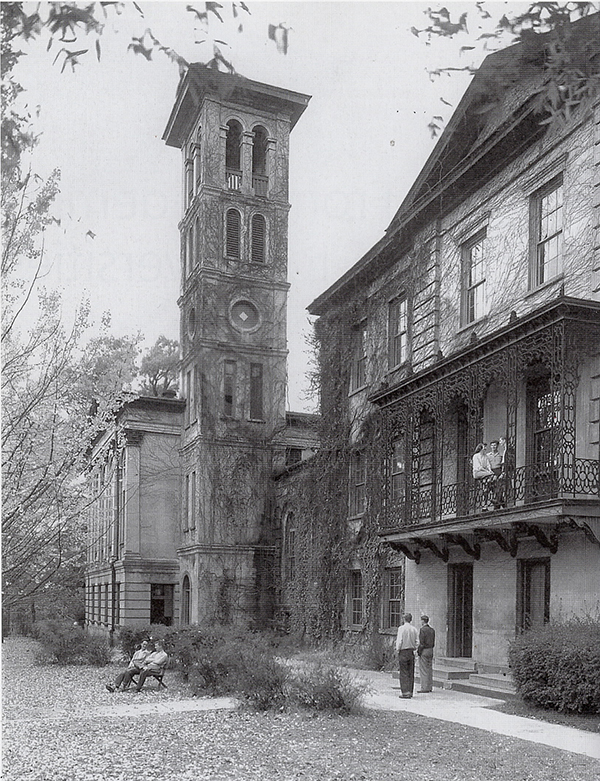 (Special Collections, Furman University, Greenville, SC)
In 1815, attracted by the rich soil of Alabama, Alston sold his acreage for $27,557 to Vardry McBee of Lincolnton, North Carolina, a 40-year old tanner and merchant. Although McBee was an absentee landlord, he understood community building, and he encouraged Greenville growth. He gave land for the first schools (the Greenville Male and Female Academies), for the first four churches (Episcopal, Baptist, Methodist and Presbyterian), and he established a brick yard, rock quarry, and saw mill, in addition to corn and grist mills, a tannery, and a large general store. Seven miles south of town he built a paper factory and cotton and woolen mills. Alston’s former home became a boarding house for the summer visitors who were making the little village a summer resort. Grist mills and water wheels dominated the Reedy River for years
The Bell Tower Now
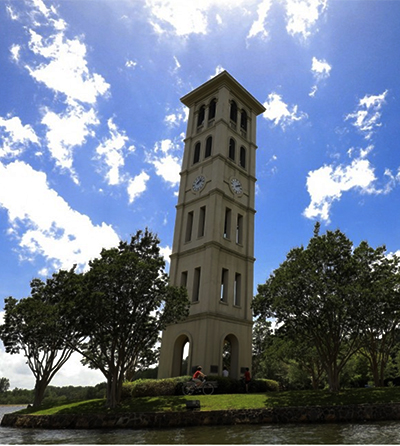 (Special Collections, Furman University, Greenville, SC)
Walking Paths at Furman
With its many parks and green spaces, Greenville has no shortage of pleasant places to walk. One of the prettiest can be found on the Furman University campus. South Carolina's oldest private institution of higher learning, Furman was named one of the 362 most beautiful places in America by the American Society of Landscape Architects. Travel + Leisure magazine ranked it among the most beautiful college campuses in the United States. A 13-mile network of paved trails offers visitors the opportunity to explore the 750-acre wooded campus. The university also features a self-guided walking tour that takes you past most of the notable buildings. You can pick up a campus map outside the Welcome Center near the main entrance. The most popular route in the trail system is a 1.5-mile loop around the university's 40-acre, spring-fed lake with its stunning view of Paris Mountain. The centerpiece of the college campus, it is home to Furman's famed Bell Tower. Dedicated in 1965, the carillon sits on a peninsula at one end of the lake and features 60 bells cast in Holland. It was built to the same specifications as the original Florentine tower erected in 1854 on the former Furman campus in downtown Greenville.
The Swamp Rabbit Railway
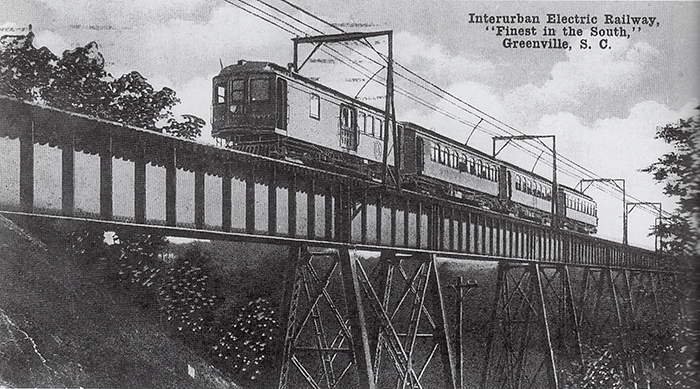
(Special Collections, South Caroliniana library, USC, Columbia)
Built way back in 1947, the train car originally operated as part of the Southern Railway, according to a report by Greenville County. The Southern Railway was a large system of lines that served to connect multiple Southern states to one another through over 6,000 miles of track. As was common practice, Southern Railway (later renamed Norfolk Southern) ultimately interchanged cars with other lines, including the Greenville and Northern. This little car took part in the trade-off..
The Swamp Rabbit Trail
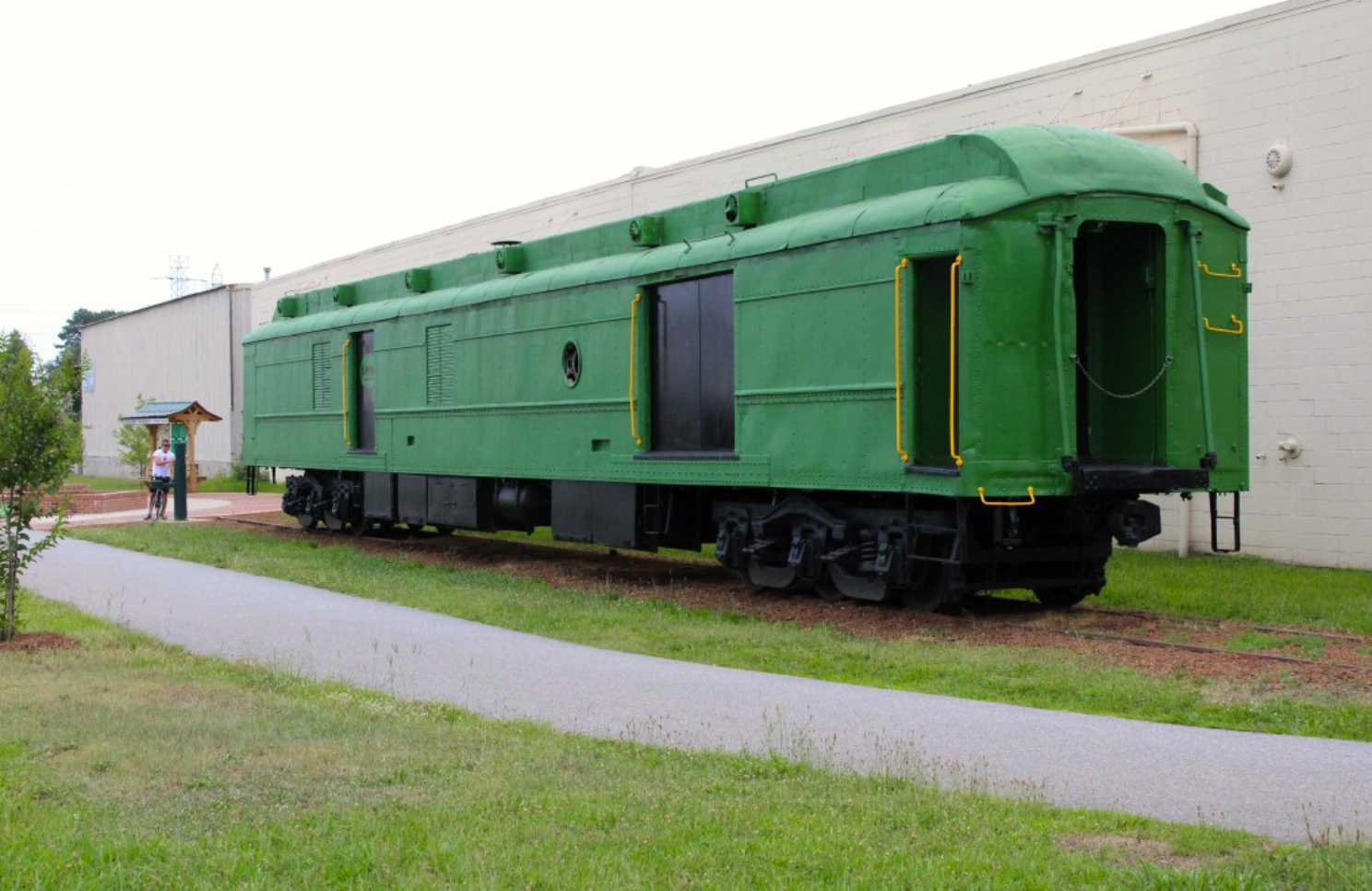
(https://travelersresthere.com/2015/07/06/the-last-of-the-train-cars-in-these-parts/)
“The railroad is why we have the Swamp Rabbit today, and this rusted railcar is the most tangible element of history that we have along the trail,” said Ty Houck, Greenville County Rec’s director of greenways, before the restoration began. What was once brown and yellow with age today boasts a fresh coat of bright green paint and welcomes trail users to pause for a breather before continuing on their journey. Swamp Rabbit Station, when completed, will include a sitting area, water fountain, flower beds, bike racks, a human sundial, and a play area for children.
For those journeying from Greenville up to Travelers Rest, even more train memorabilia lies ahead. At the History Museum of Travelers Rest, for example, you can take a gander at old railroad crossing signs, photographs, whistles, and even a genuine train conductor’s hat. Perhaps the neatest part is that the museum curates the items on display from locals, whose families have, more often than not, lived in Travelers Rest for generations.