Greenville's Foundations
River Run Mills
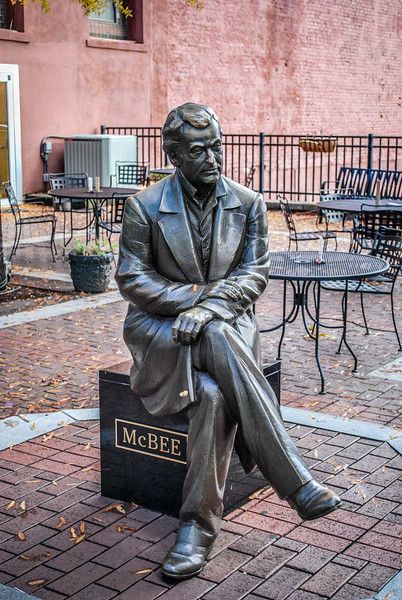 Photo by Irina Rice for the Greenville Journal
In 1815, attracted by the rich soil of Alabama, Alston sold his acreage for $27,557 to Vardry McBee of Lincolnton, North Carolina, a 40-year old tanner and merchant. Although McBee was an absentee landlord, he understood community building, and he encouraged Greenville growth. He gave land for the first schools (the Greenville Male and Female Academies), for the first four churches (Episcopal, Baptist, Methodist and Presbyterian), and he established a brick yard, rock quarry, and saw mill, in addition to corn and grist mills, a tannery, and a large general store. Seven miles south of town he built a paper factory and cotton and woolen mills. Alston’s former home became a boarding house for the summer visitors who were making the little village a summer resort. Grist mills and water wheels dominated the Reedy River for years
Textiles
(Special Collections, South Caroliniana library, USC, Columbia)
Camperdown Mills
The Camperdown Mills were the first of the modern textile mills to be opened within the corporate boundaries of the City of Greenville and the first in Greenville county whose principal purpose was to manufacture and export cotton yarns to other areas of the United States. In 1873 New Englanders Oscar Sampson and his son-in-law, George S. Hall, leased the old Vardry McBee mill on the west side of the Reedy River from McBee’s heirs. The mill, later known as Camperdown Mill #1, was remodeled and enlarged. Camperdown #1 began operations as a spinning mill in June 1874.
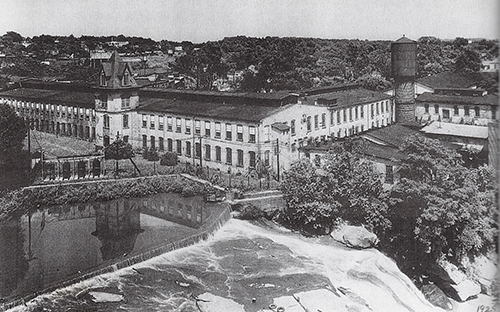
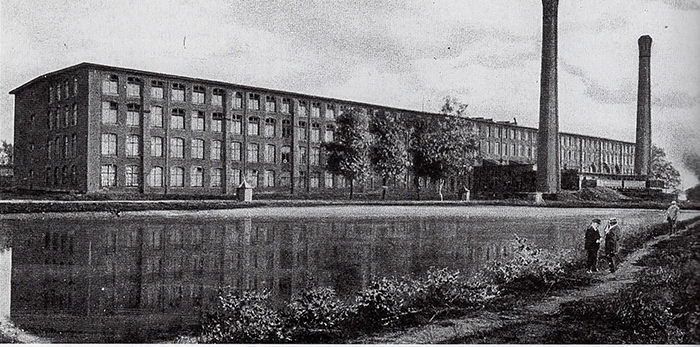 (Special Collections, South Caroliniana library, USC, Columbia)
Poe Mill
The Mill owned by Francis Winslow Poe began operations in 1897. Equipment was 10,080 Spindles and 304 Looms. In 1907 equipment was increased to 61,312 Spindles and 1,520 Looms. The Companies property consisted of about 75 acre’s. Buildings consisted of the main Mill, Ice Plant, Store, Church, and School. The Store had rooms for the Company Office, Clubs, and Society Halls etc. The Church was shared for services by the Baptist and Methodist’s. The Presbyterian’s had no organized Church, but held services in the Church about once a month. Years later a second Church was built and became a Methodist Church, the Baptist remained in the first Church. The School’s first floor was occupied by the Poe Mill Library and Social Club Rooms. The Library was opened each night until 10 o’clock and on Saturday and Sunday afternoons. The second floor was classrooms, and the School Library. The third floor was the Auditorium fitted for School exhibitions and other amusements and entertainments.
Gassaway Mansion
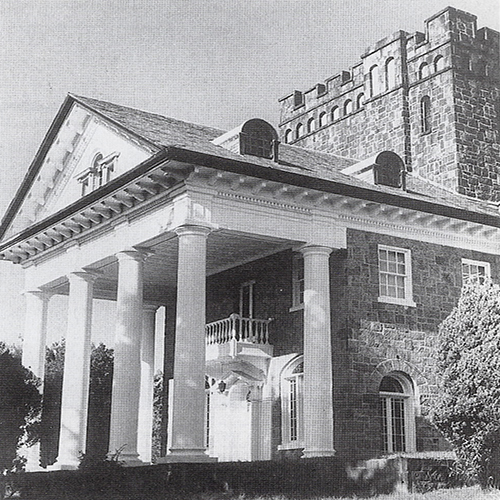
(Special Collections, Greenville County Library)
Greenvillians have always enjoyed art, music, theater, and dance. Finding facilities for the visual arts proved challenging and till 1958, when the country's art Association purchased the Gassaway Mansion also called the Issaqueena mansion built in 1919 for Use as a museum. Seen here in Marsh’s 1962 photograph, Gassaway cost $790,000 and contained 70 rooms and at tower constructed from the stones of the old bargery mill. Special collections, South carolinian library, USC, Columbia. Most of the estate was sold for house lots, and the mansion was converted into rental apartments. In 1959, the building was purchased by the fledgling Greenville Art Museum, which occupied it and built an art school building on the property. After the art museum moved to a purpose-built gallery on Greenville's Heritage Green in 1974, the mansion sat vacant until purchased in 1977 for use as a church and school. The building once again became a private residence in the 1990s, and it has since been maintained through rentals as a wedding venue.